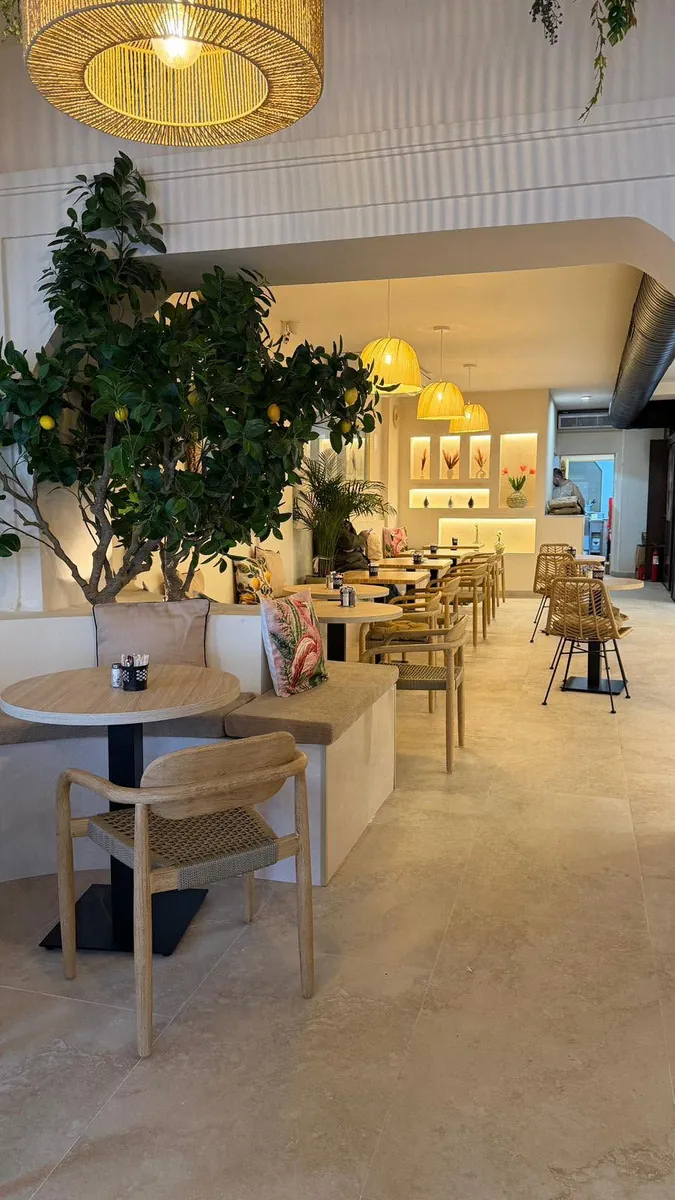
Duquesa Port
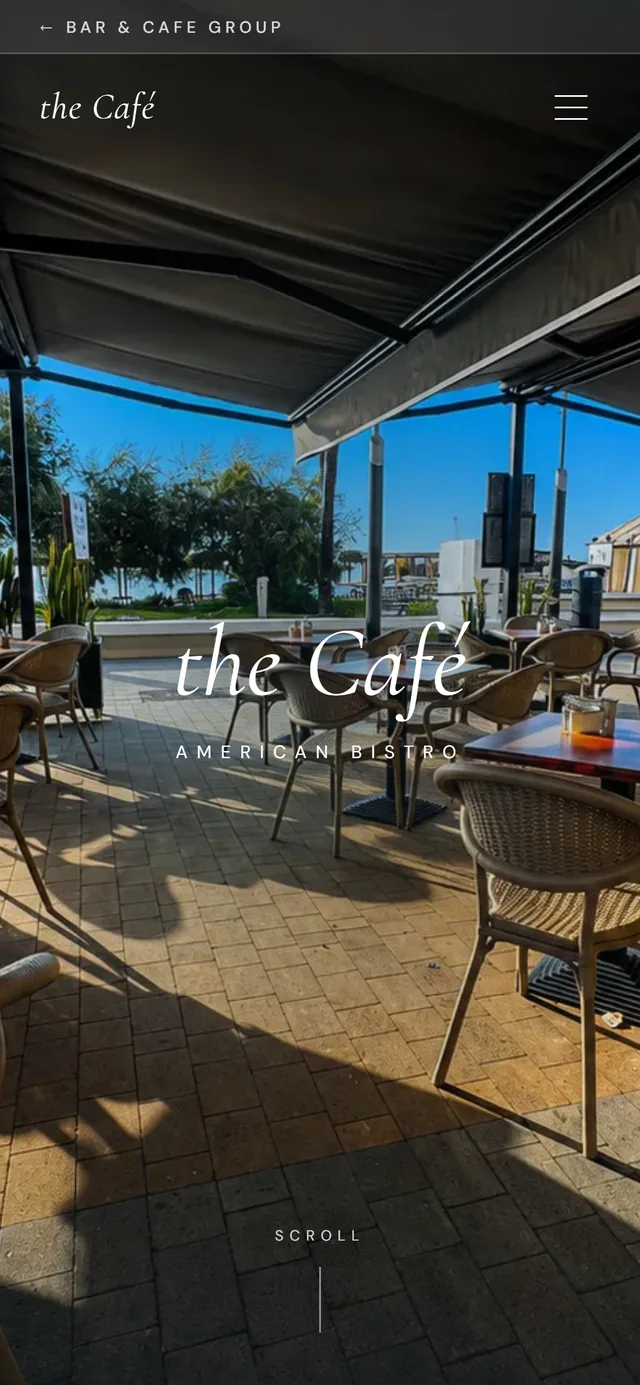
Cafe III American Bistro
All-day bistro under vaulted arches and trailing botanicals, the marina on the doorstep.
One group. Five venues.
One digital system.
A hospitality group on the Costa del Sol needed five distinct venues to stand on their own online while running on one shared foundation. We designed and built the architecture, the five venue experiences and the booking enquiry flow underneath them.
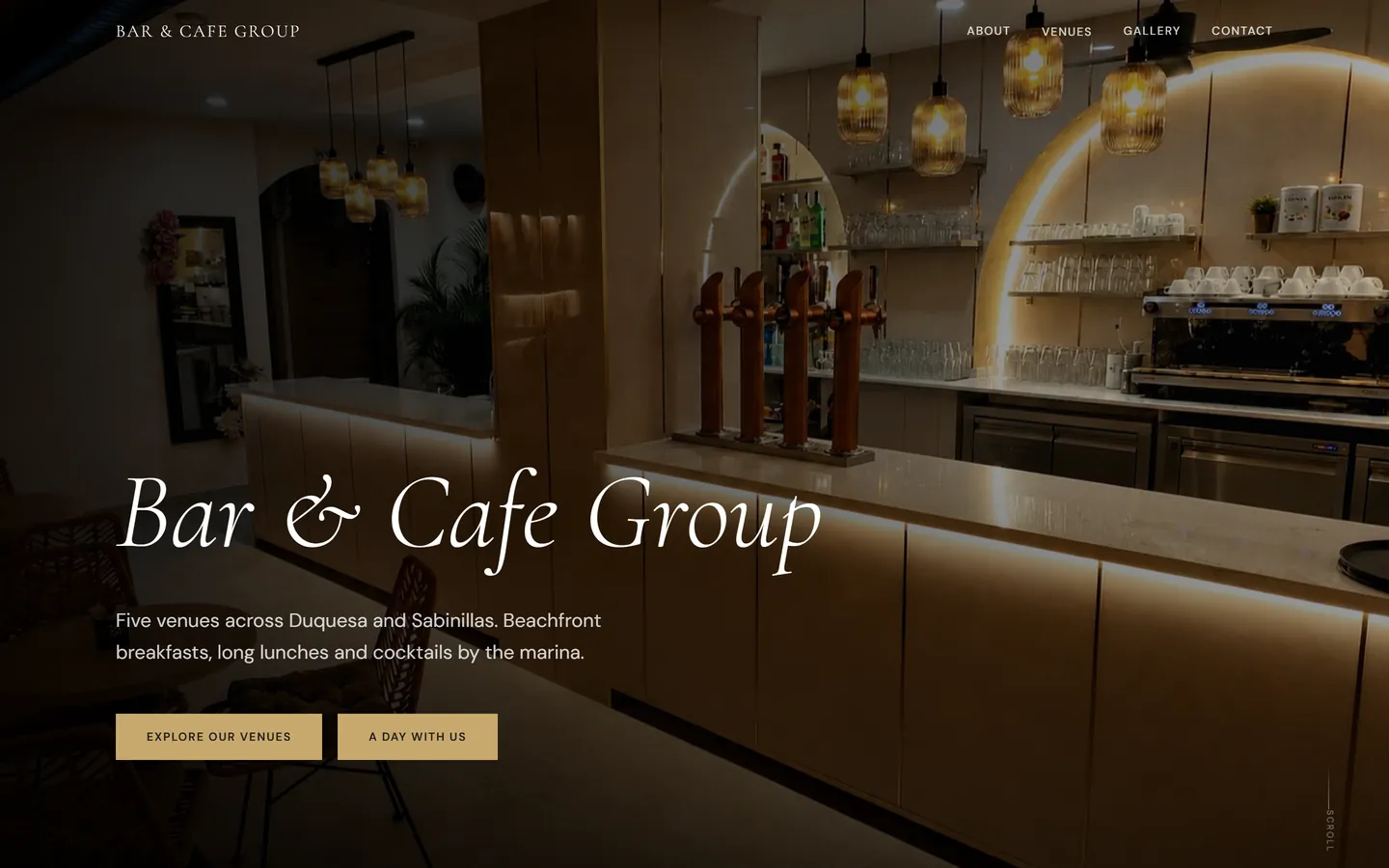
Two American bistros, a Mexican steakhouse, a cocktail bar and a beachfront restaurant — across Duquesa Port and Sabinillas. One owner, one standard, five very different rooms.
Each venue has its own name, its own kitchen and its own regulars. A single group website would flatten them into one brand. Five unrelated websites would multiply the upkeep and lose the group entirely — five sets of hosting, five codebases, five places to change a phone number.
Represent the group coherently. Give every venue a genuine identity of its own. Present menus and information clearly. Carry a guest from browsing to a table. And stay maintainable as the group adds venues, changes menus or moves a venue to its own address later on.
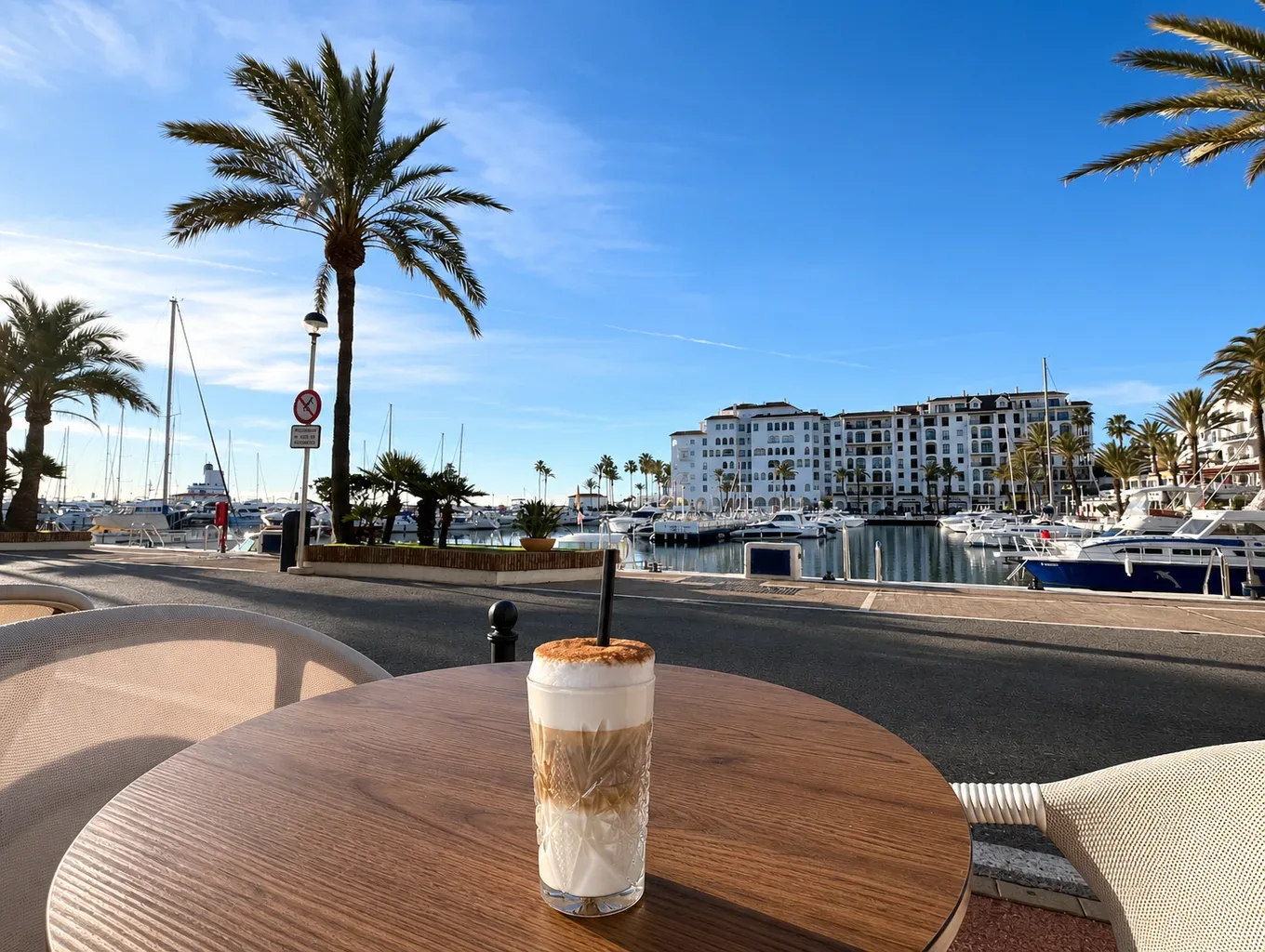
One codebase and one data layer sit underneath. On top, each venue is designed as its own experience — its own type, colour, photography and menu. The group is the spine; the venues are the story.
Its identity, imagery, menus, gallery, contact, location and booking.
Same system underneath.
Different worlds on the surface.
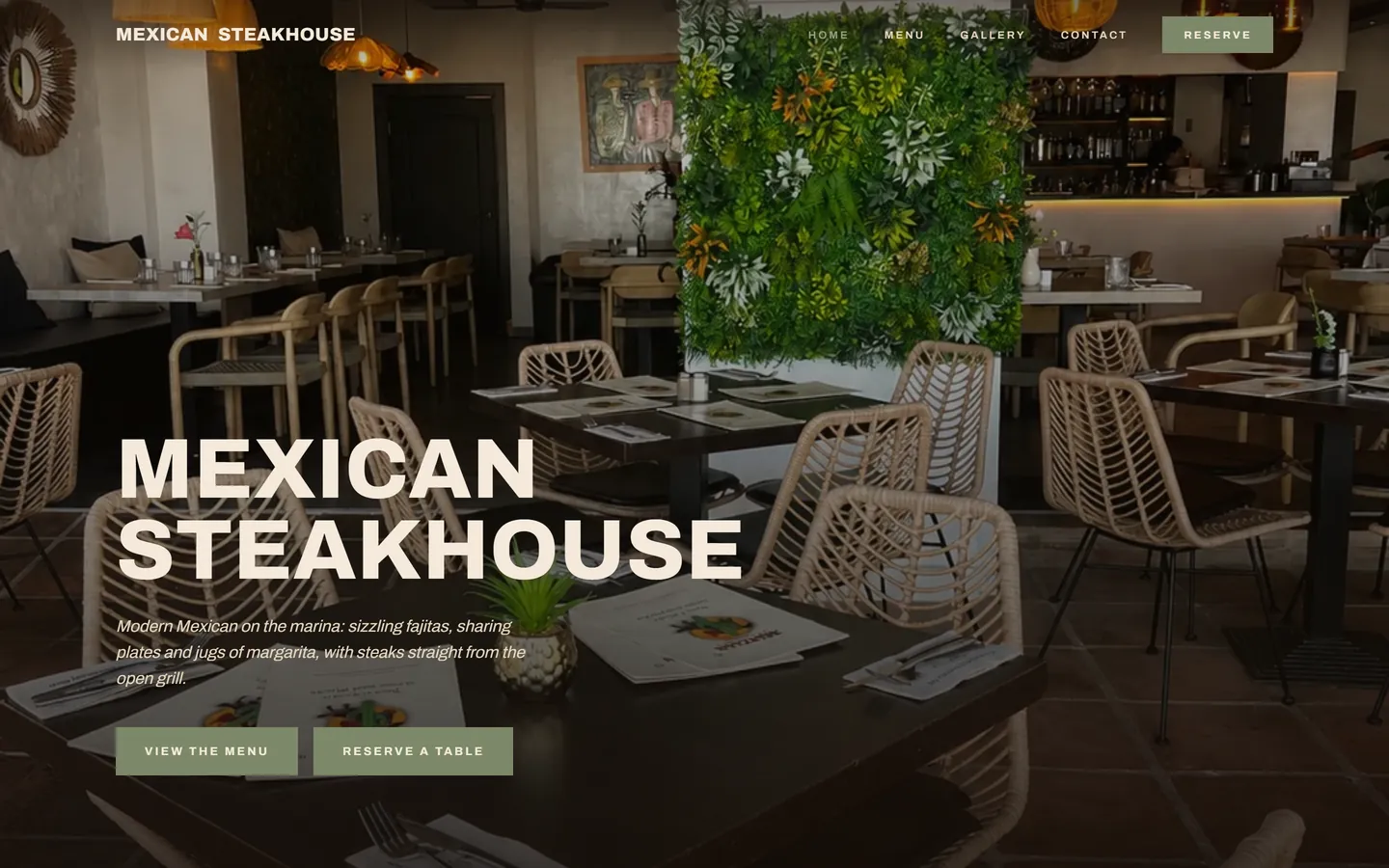
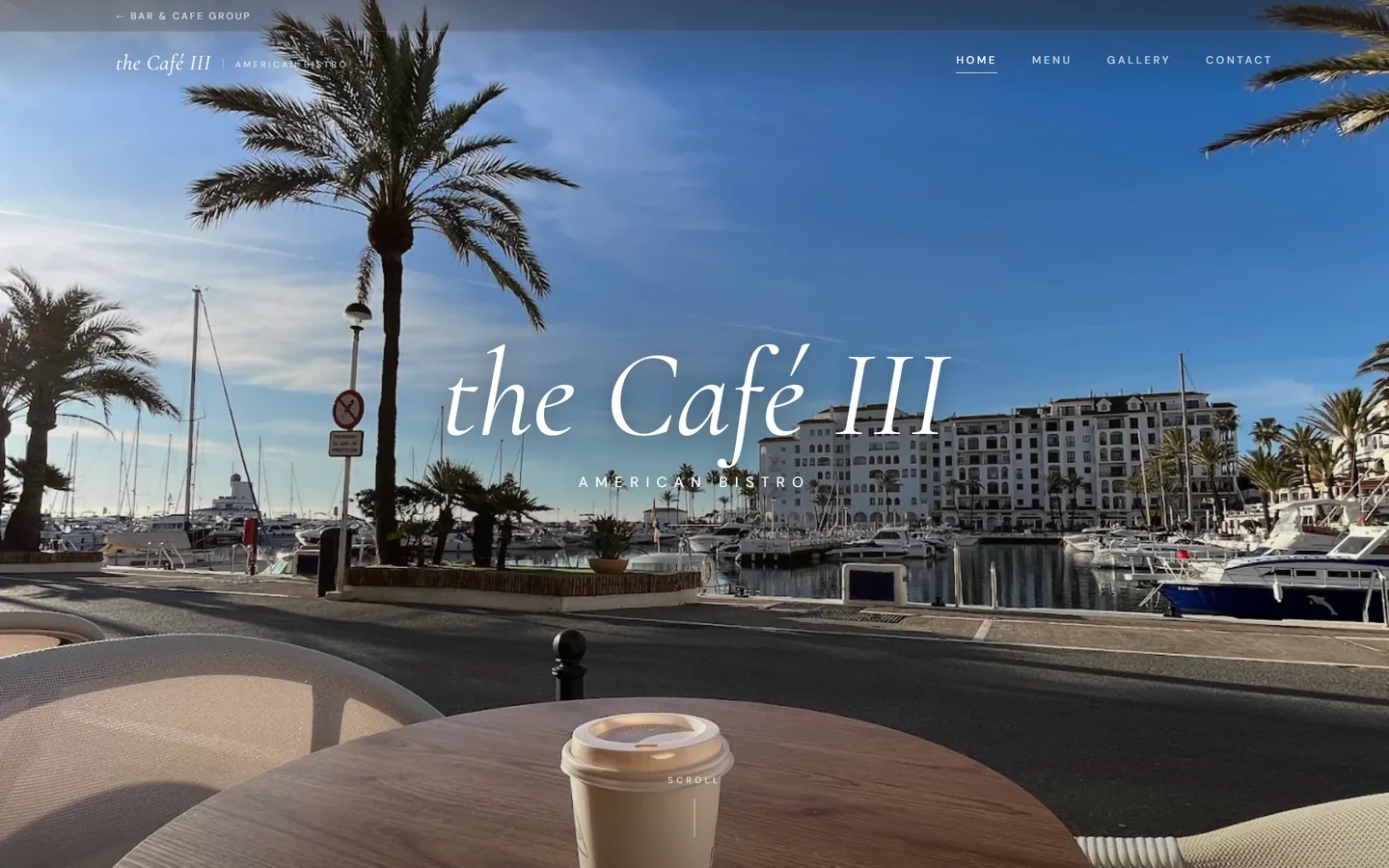
Each built as its own mini-site, with photography and copy drawn from the real venue — not five copies of one template.
All-day bistro under vaulted arches and trailing botanicals, the marina on the doorstep.
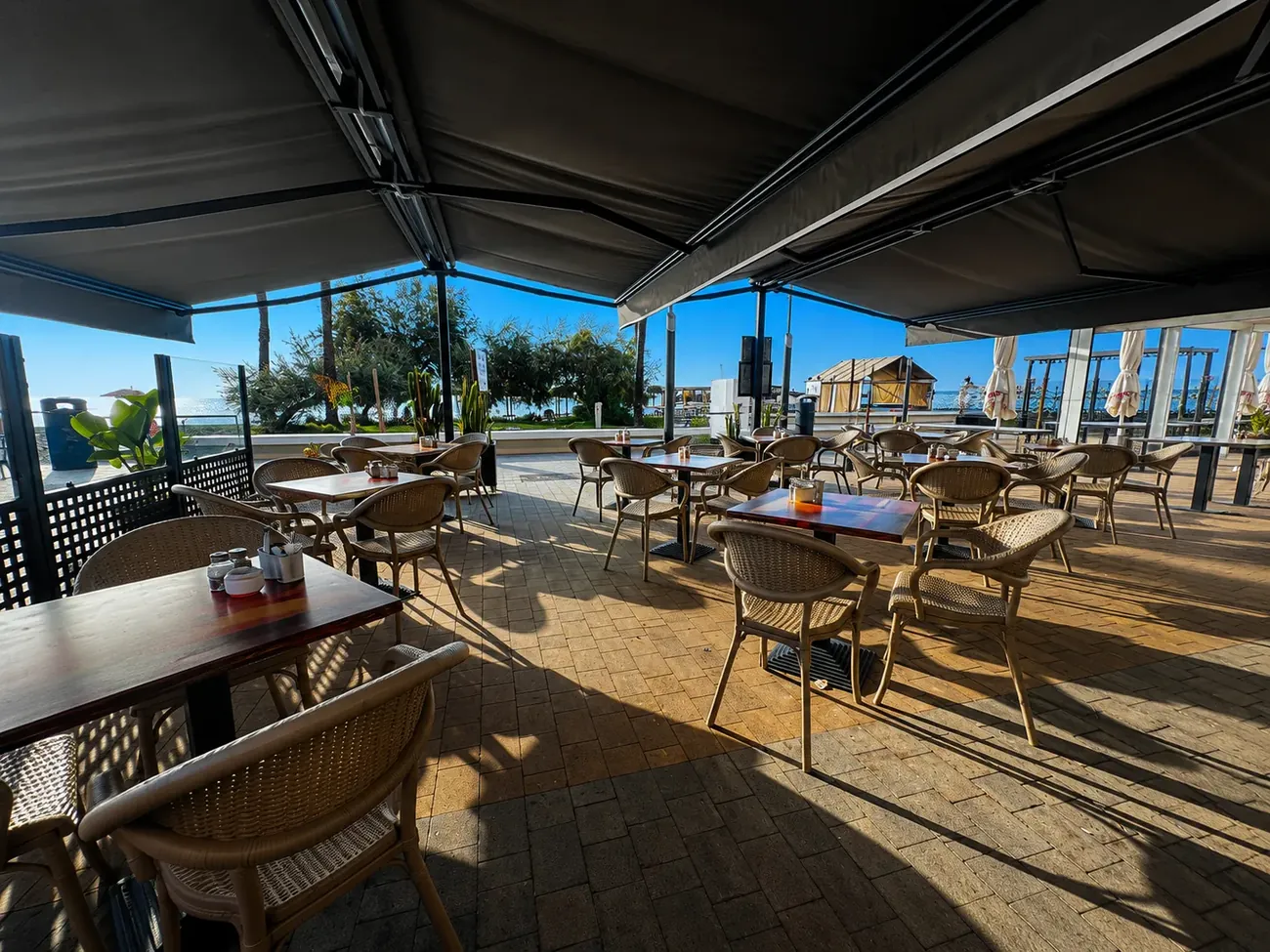
A beachfront café on the paseo — breakfast through to cocktails, sunbeds on the sand.
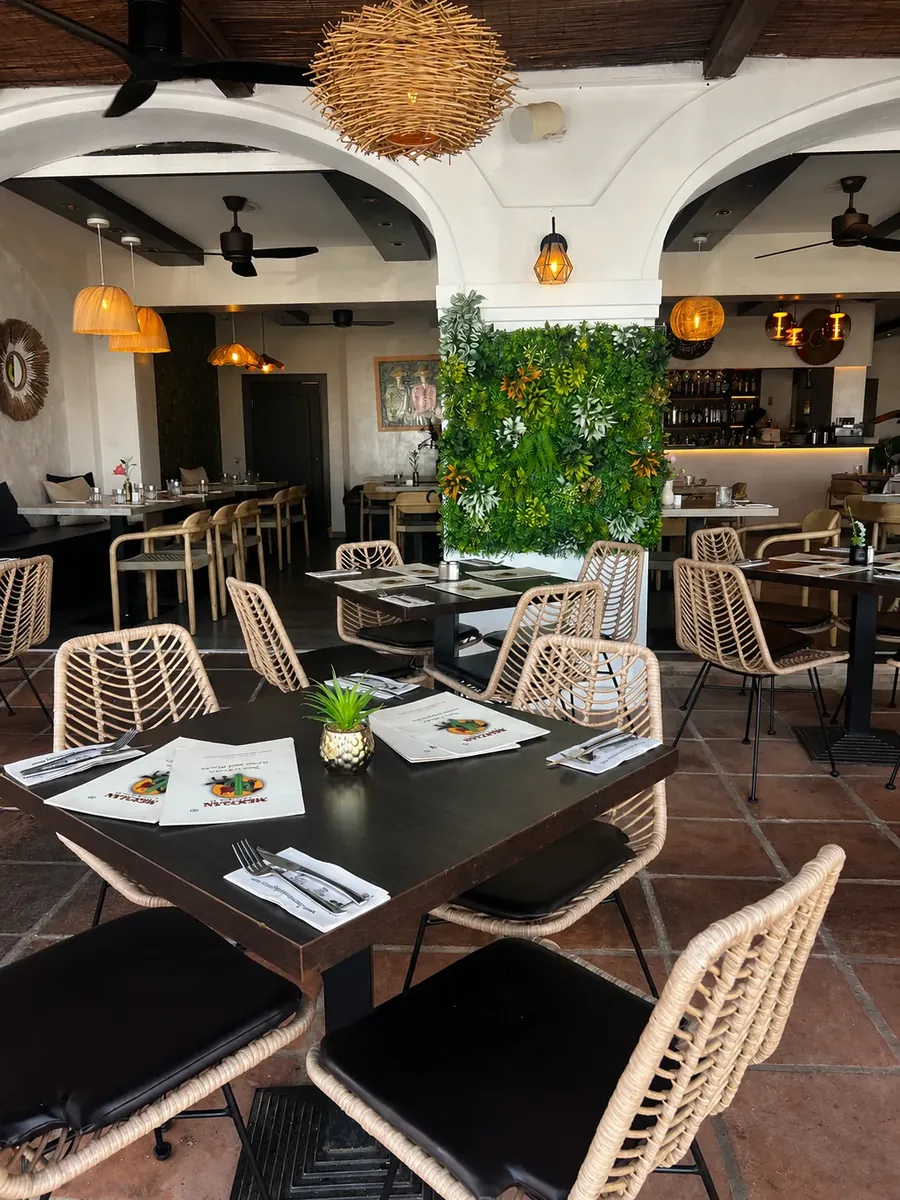
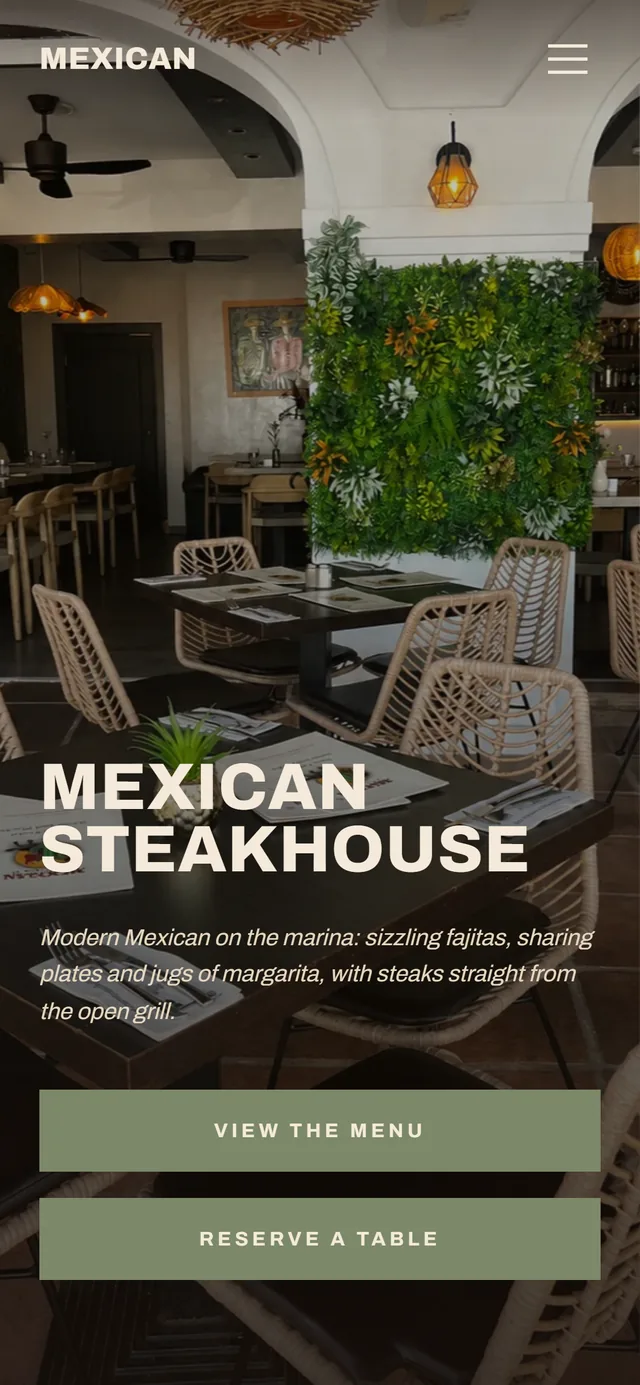
Sizzling fajitas, sharing plates and jugs of margarita, steaks straight off the grill.
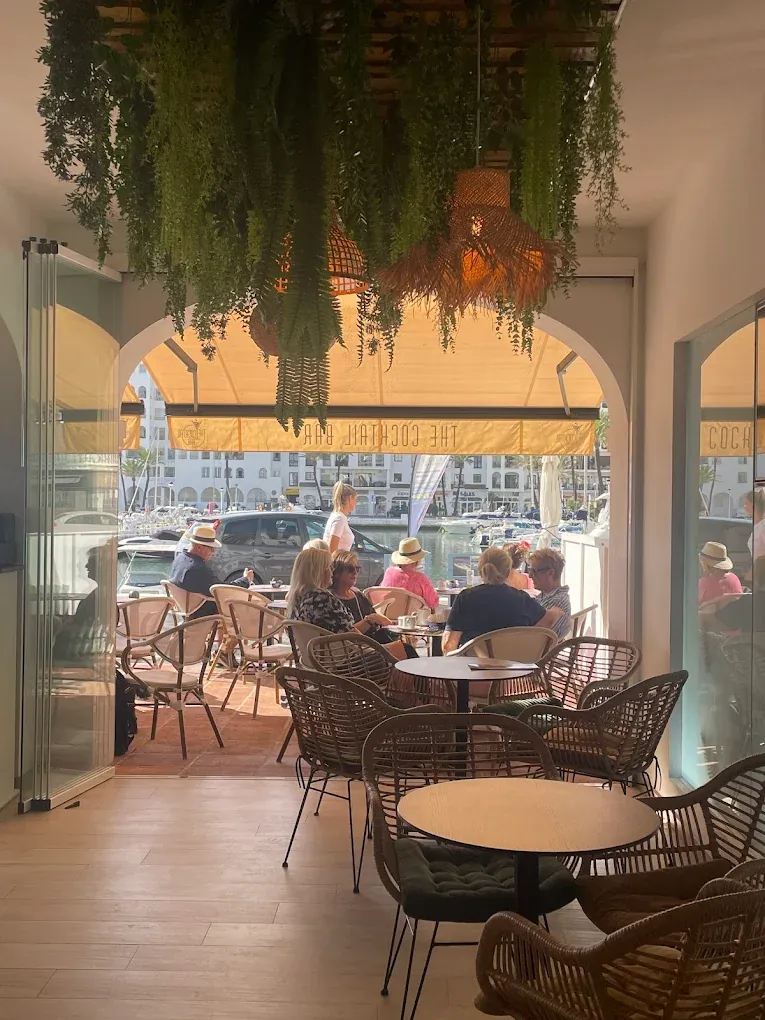
Aperitivos, signature cocktails and harbour sunsets right on the marina.
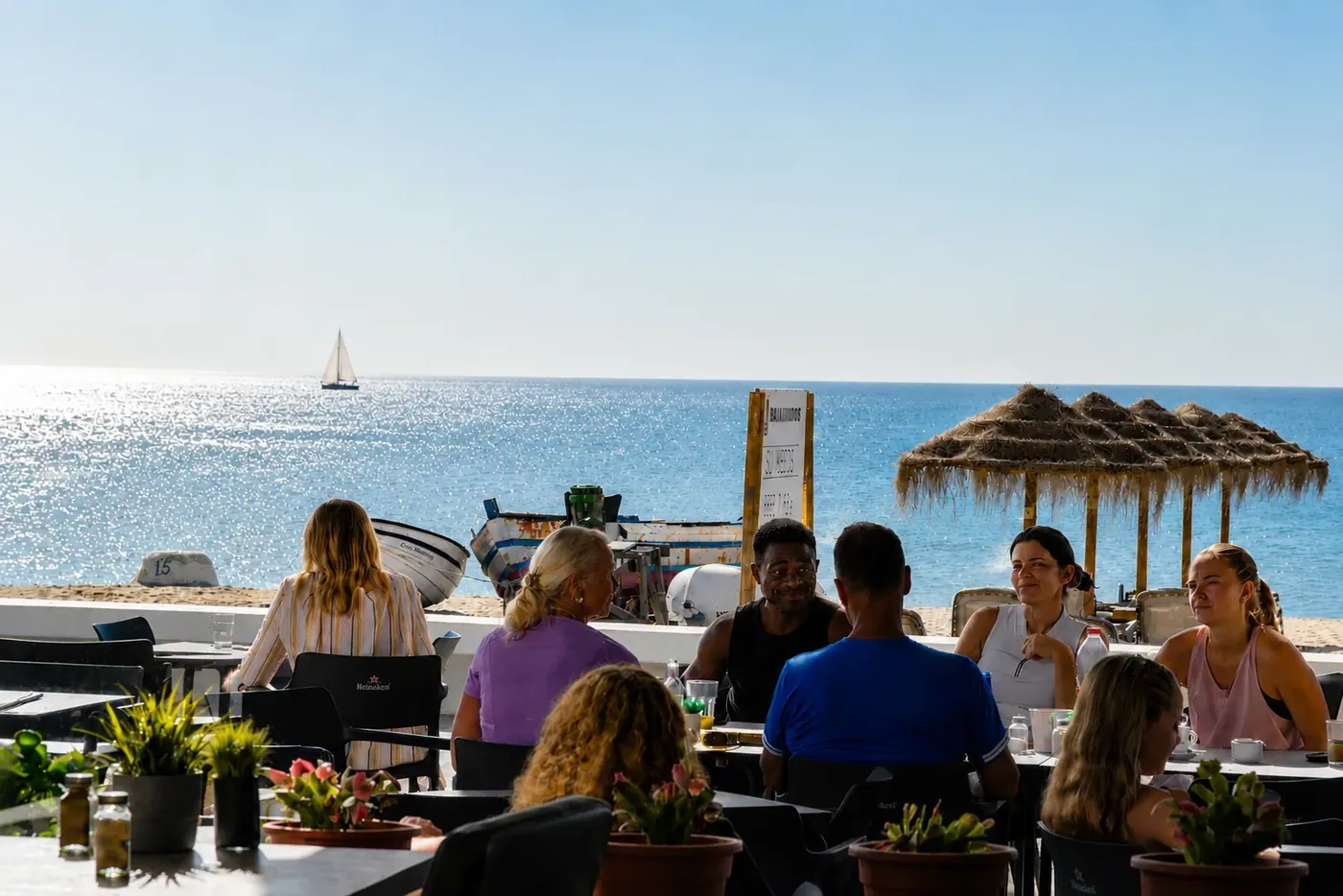
A beachfront restaurant and bar on the Sabinillas promenade, sunbeds by the sea.
The engineering that makes five venues cheap to run and quick to change — understandable to an owner, honest about how it works.
Change a phone number, a menu price or an opening time in one place and it updates everywhere it appears. Because the URLs were built subdomain-ready, any venue can move to its own address later without a rebuild. It’s the same thinking behind our booking & business systems work.
Every menu is set as a real, structured web page — transcribed from each venue’s own printed menu, section by section, with a sticky index to move around.
No pinch-to-zoom PDF. That means the menus load instantly on a phone at the table, read cleanly for search engines, and are changed by editing data rather than re-exporting a document.
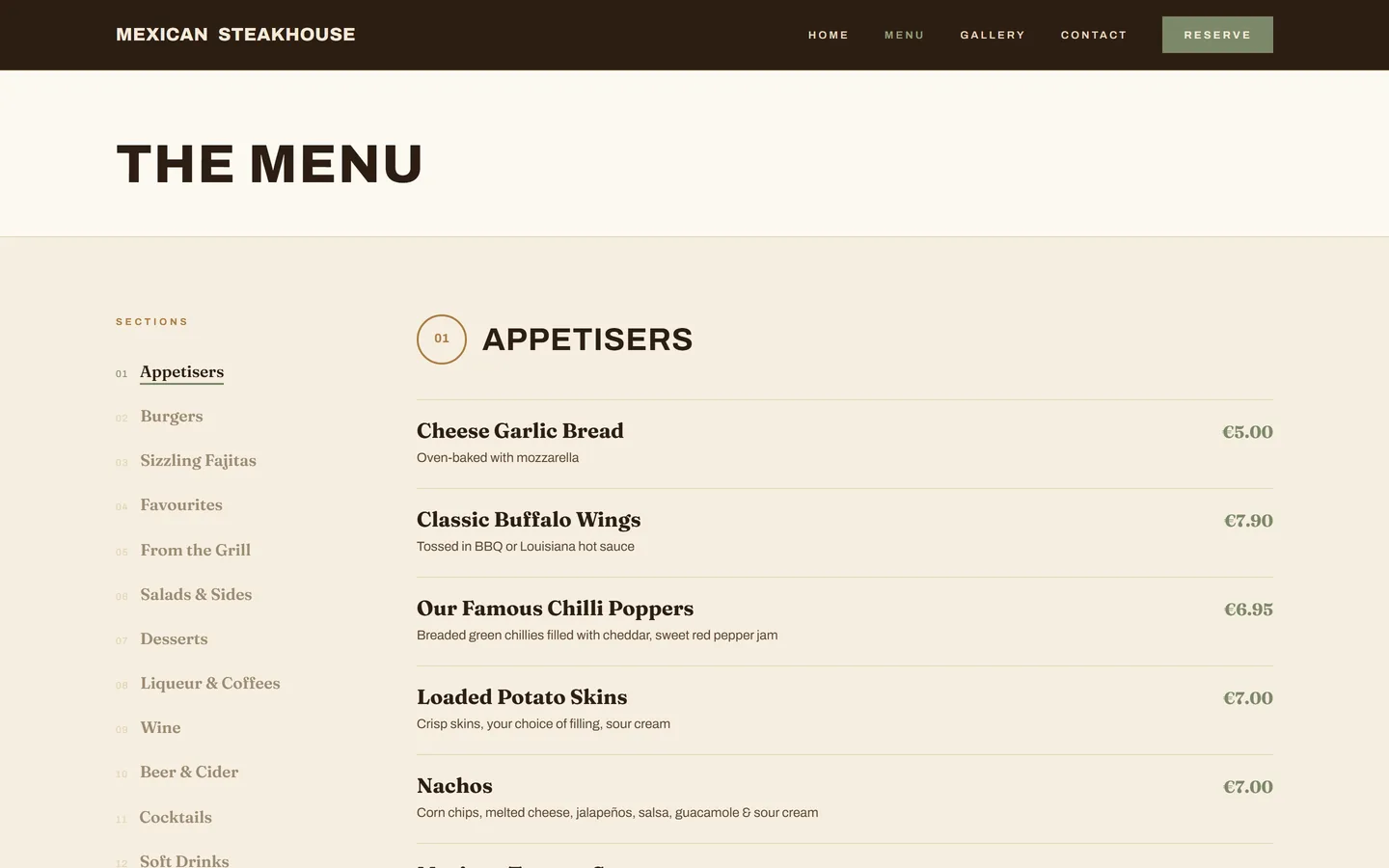
Categories, dishes, descriptions and prices are real text and markup — legible to guests and crawlers alike.
Breakfast, fajitas, from the grill, cocktails — jump straight to a section without endless scrolling.
A price change is a one-line edit in the venue’s data, not a trip back to a designer and a new PDF.
The place most menus are actually read — so that’s where the experience was built first.
A booking enquiry flow was integrated for the Mexican Steakhouse. A guest sends their details; the request is validated and emailed straight to the venue to confirm.
It is deliberately an enquiry, not an automated reservation — the form and the confirmation both say so plainly: the table isn’t held until the team replies. It runs on a server-side function so the email key is never exposed in the browser, with spam protection built in.
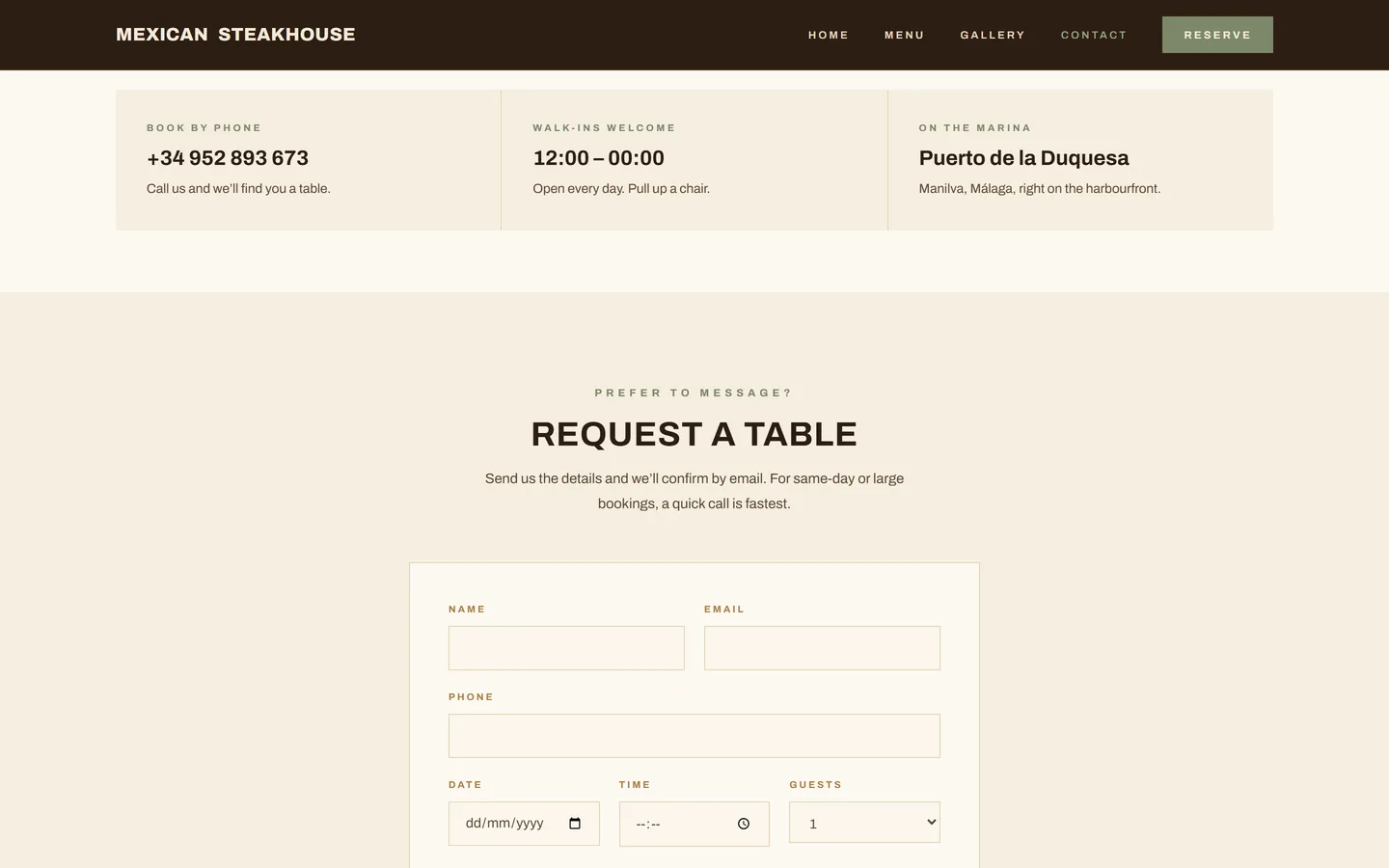
Name, date, time, party size and a note — everything the venue needs to call the guest back.
Validated on the server and emailed to the restaurant, ready to reply to directly.
Both the form and the email state the booking isn’t confirmed until a person responds.
The email credential lives server-side only; a hidden honeypot keeps the bots out.
Five venues means a large photography library. Shipped carelessly, that is what makes a beautiful site slow. So it was treated as an engineering problem, not just a design one.
venues, each with its own hero, gallery and food photography.
optimised images across the site, delivered predominantly as WebP.
loaded below the fold; each hero preloaded so the first view lands fast.
Every image is resized to sensible dimensions, converted to modern formats and given intrinsic width and height so the layout never jumps as it loads. Below-the-fold galleries load only when a guest scrolls to them; the one hero image each page needs first is preloaded. The result is a photography-heavy site that still behaves like a light one.
Modern, well-supported tools and one deploy pipeline — enough to do the job, and nothing a small hospitality group would struggle to keep running.
It’s hosted on Cloudflare’s global edge, with the booking enquiry handled by a serverless function on the same origin. The technical SEO is centralised, so titles, descriptions, canonical URLs and structured data for the group and all five venues come from a single source of truth — the same discipline behind our hosting, SEO & support.
A static, component-driven front end — no CMS or database to administer.
Multi-venue businesses don’t need a website each, and they don’t need to disappear into one group brand. A shared architecture can give every venue its own identity on the surface while one team maintains a single system underneath. It’s the difference between a website and a system that a group can grow with.
Five distinct venue experiences on one shared architecture. Structured, editable menus for every venue. A booking enquiry flow for the Mexican Steakhouse. A large photography library, optimised for the web. Centralised, subdomain-ready SEO. Live and in daily use.
One hospitality group, five distinct venues, one shared digital system — designed, built and running in production. Proof that the studio builds maintainable systems, not just single websites.
If you’re juggling several venues, sites or brands, tell us about them. We’ll show you what one shared system would look like — and what it would cost.
Start a project →